
Monday, July 28, 2008

Sunday, July 27, 2008
"Satan laughing spreads his wings..."
 "Angels are partisans not of Good, but of divine creation. The Devil, on the other hand, denies all rational meaning in God's world. World domination, as everyone knows, is divided between demons and angels. But the good of the world does not require the latter to gain precedence over the former; all it needs is a certain equilibrium of power. If there is too much uncontested meaning on earth (the reign of the angels), man collapses under the burden; if the world loses all its meaning (the reign of the demons), life is every bit as impossible." - Milan Kundera
In Milan Kundera's novel The Book of Laughter & Forgetting, he not surprisingly deals much with the idea of laughter and its meaning. According to Kundera, the Devil invented laughter: "Laughter is the province of the Devil. It has a certain malice to it (things have turned out differently from the way they tried to seem), but a certain beneficent relief as well (things are looser than they seemed, we have greater latitude in living with them, their gravity does not oppress us)." In light of this, the Devil is thus both a liberator and a tempter. He is a singularity of abyssal irony, something we all find in ourselves but could never become completely. He both repels and attracts; he is a she and she is an it. As Max Von Sydow reminds us in The Exorcist, "Satan is a liar and a cheat." But does he ever lie about that?

In Christopher Nolan's The Dark Knight, The Joker, so superbly played by the late Heath Ledger*, is none other than a modern take on this Devil character, i.e. humanity's absolute Other. Unabashedly unified in his chaotic whimsy, he is also lacking the strength of restraint and the power of compassion, the stuff angels are made of. The choice to have The Joker tell two completely different stories about how he got his scars shows how completely inhuman he is; for him, there is no past and no future. His seductive qualities lie in his complete immersion in the moment, in the act of orgasm, of complete and singular fulfillment of desire above all.

Batman, on the other hand, is very human. He needs the rich, kung-fu-chopping Bruce Wayne to exist (as all the imitators make painfully obvious). Furthermore, if Bruce Wayne ceased to exist, Batman would surely descend into the world of The Joker. "Absolute power corrupts absolutely." Alfred burning Rachel's note, ensuring that Bruce will never know the truth about himself, has secured Batman's reality as a role and nothing more. While Bruce Wayne's reserves about being Batman are deeply human, his choice to persist as Batman is divine. The twist is his status as an anti-hero, but even this is no more than par for the saviour course; after all, Jesus being crucified was part of God's plan, and his being part-God was just as critical.
To withdraw from Theology and move over to Idealism: Gotham City is nothing less than the jumbled mind of Man**, disconnected from its destructive instincts and irrationally but ignorantly bound to a superficial order of things. In Gotham, you basically have The Joker as Chaos, Batman as Jesus, and People as People in all their near-sighted, vain, but ultimately endearingly graceful glory. Chance is the absolute reality these people must face, and it is their attitudes towards it that define them: The Joker laughs at it and does what he can to master it for his own amusement, Batman gravely looks it in the eye and does what he can to combat its destructive downswings, and People are largely trapped in its ebb and flow. Indeed, The Joker and Batman are apart from Chance while People are caught in its gears, perhaps even constitute it. Within the sphere of Chance, The Joker's anarchic machinations create the necessity*** for Batman, and without either, Gotham wouldn't be Gotham and humans wouldn't be humans.

Bullshite analysis aside, I loved this movie. The performances were explosive and the plot sizzled with relentless excitement. I think Harvey Dent was an extremely interesting sub-plot and I think his necessity to the story is fascinating. In reality, he saves Batman and is the hero Gotham needed, albeit thanks to a white lie. Harvey Dent "falls" because he cannot fathom The Joker; he cannot account for his existence. He naively believes that evil is evil and evil is not him, thus with blind good conscience he makes it his goal to eradicate it. One devastating twist of fate, however, leaves him a shell of a human who, like Anton Chigurh, begins tragically to worship the amorality of Chance in order to quench the often seemingly unquenchable thirst for justice in a world where The Joker not only exists, but thrives. Also, it is probably his cleft chin, but he continually reminded of the Father in Troll 2 (!).
A question for other people who have seen The Dark Knight: Does The Joker intentionally mix up the addresses of where Dent and Rachel are being held or is he mistaken? If it's totally his show as it seems, how did Ramirez enter the fold? Was it a mob set-up that The Joker happened to privy to, or did he author it?
* - SO FUCKING SUPERBLY.
** - I apologize for this sexist lapse. I only use it for rhetorical effect as well as appropriateness. Come on, those German assholes were straight-up misogynists.
*** - I say necessity in terms of Freedom being the ultimate goal of human endeavor. The Joker seems free, but of course he is not, being slave to his whim and endless desire.
Friday, July 18, 2008
Watching the World Burn

A few hours removed from my first viewing, I think that a second viewing might be in order before I write a full review. Suffice to say that Nolan's film is an impressive and ambitious addition to not only the comic book film pantheon but to the crime genre in general - a tightly woven, scarily realistic morality play about the role of chaos in our fair play obsessed culture.
Go see it and we can all talk about it....
Friday, June 13, 2008
Topics of Discussion
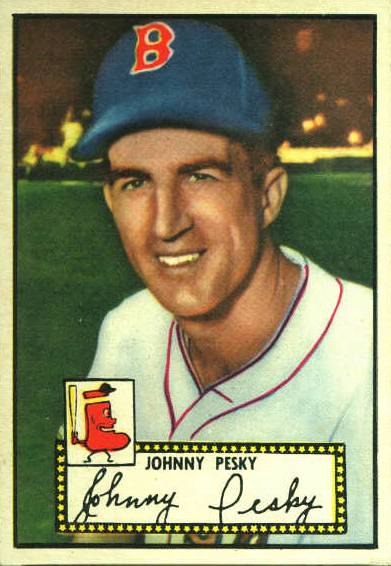
chiggers/ticks/mosquitoes and all manner of insidious pests; the automatic weapon he got to fire at a family reunion; FDR; a possible rabbit infestation under his shed; fond remembrances of a busty woman he saw jogging several decades ago; a 1939 Johnny Pesky rookie card; Libertarians; the elephant skin belt he wore sometime in the 1960s; dental hygienists; skipping his high school graduation to leave for Navy boot camp; rhubarb; researching local politicians on Google; the end of the world; knee injuries; turkeys; and a dog he used to own with a penchant for barking at people of Arab descent.
Thursday, June 12, 2008
Whaaaa?
I had heard a lot about Charles Manson's parole hearings (he's been up for parole 11 times since 1978) prior to seeing this, but...yikes.
Tuesday, June 3, 2008
Bananas on the Brink
 Dan Koeppel, author of Banana: The Fate of the Fruit That Changed the World, reports that the banana as we know it may soon become a thing of the past.
Lack of genetic variation makes bananas especially susceptible to infection and Panama disease, the fungus that wiped out the Gros Michel banana of our grandparents generation, is now threatening the modern Cavendish banana. Read Koeppel's article Banana R.I.P for an excellent overview of the impending crisis.
For those interested in learning more about the fate of America's most popular fruit, Koeppel's website, bananabook.org, is a comprehensive resource for all banana related news and events.
Monday, May 5, 2008
German Idealism REDUX
If philosophy isn't your cup of tea, please scroll down and enjoy Josh's delightfully introduced link to TIME magazine's 100 Most Influential People list. For everyone else, please enjoy/criticize the following:
The ALL – The concept of ALL is similar in function and nature to the concept of infinity. That is, both consist in irony. In other words, the concept ALL is not and can never be identical to the ALL per se. Infinity and the ALL are both originally and essentially positive. Subjectivity itself is defined by the revelation of the ALL as differentiable, which consists in negation, i.e. subjectivity.
------
The ALL and its remainder – If the ALL is fundamentally a paradox, like nothing and infinity, there is an insurmountable chasm between the sign and the signified. These words by definition resist identity-thinking because they are expressly non-identical to that which they refer to.
------
The primacy of belief – Any and all forms of negation consist in belief. Belief itself can be divided into justified belief (knowledge) and dogmatic belief (faith). The structure of belief is a wall, or a point beyond which questions pertaining to the ontology of that which is in question become incoherent and unintelligible. The wall of knowledge is the cogito, while the wall of faith is the ALL.
------
What does it mean to disbelieve? – To disbelieve is the essence of skepticism, which itself paves the ultimate path to pure knowledge. Skepticism recognizes the fundamental reality that all positive knowledge really consists in negation, and thus all knowledge consists in belief. In fact, Hegel’s project in the Phenomenology consists largely in showing that Kant provides a realization of this paradigm, insofar as he assumes an absolute skepticism towards reality per se, and imagines a secondary contingent reality – the phenomenal realm, or realm of possible subjective experience – of which, he claims, positively justified knowledge can be known. As an idealist, Kant had faith in this distinction. He achieves the absolute separation between the subject and the object by creating an absolute separation between the object and non-objective reality, or the ALL. By dividing the ALL per se into phenomena and noumena and simultaneously extracting the subject from the ALL, we are confronted with the absolute, unquestionable subject/object distinction.
------
Hegel vs. Kant – In response to the unquestioned irony built into Kant’s epistemology, Hegel inverts Kant’s reality by giving phenomena primacy and dismissing noumena, which cannot be objectively known, as “less than shadows.” Hegel’s distressing fear of irony* forces him into a repetitious, often circular epistemology that aims at a communion of subject and object. Hegel’s Absolute, the totality of objectively knowable reality (thus everything), has no outside and thus claims to be the ALL not simply identified, but identified as the totality of that which is always already becoming.
*Hegel and Irony – It is not irony in itself that Hegel fears; it is the unexamined, assumed irony that Kant unquestioningly uses as the bedrock upon which he erects his three critiques. Attempting to overcome irony, rather than ignore it, although necessarily futile, proves to be the nature of life itself. Thus when we find that Kant was bound to his hometown and was no traveler to say the least, the hermetical odor that pervades his work makes perfect sense, while Hegel, not afraid to confront uncertainty without writing it off as such, produced works that have a far more human flavor. Hegel’s Romantic grandiosity exists in truth, while Kant’s certainty-driven epistemology exists for truth.
-----
Apperception as negation – Apperception is essentially negation. In other words, if I call to mind the fact that I am currently formulating ideas and writing, I am essentially saying that I am absolutely doing nothing else, thereby making an a priori objective statement. If the conditions of the possibility of my formulating ideas and writing are met, I am necessarily doing nothing else but formulating ideas and writing. In order to believe this to be a proper description of reality, I must grant knowledge – i.e. the primacy of the objectively answerable question – primacy. Pure knowledge, of course, does not consist in positivity, but in negativity. As an epistemologist, Kant had to first negate reality (ignore it as unknowable) in order to assert anything positive about it (as phenomenal reality). Pure knowledge requires that we disbelieve that it is itself a form of belief.
------
All knowledge is reducible to self-knowledge – Within the Kantian framework, knowledge can be reduced to self-knowledge insofar there is only one Self, i.e. the rational agent. Within the Hegelian framework, knowledge can be reduced to self-knowledge insofar as there is only one Self, i.e. the Absolute, or Geist. The difference between these two notions of Self is a variation on the subject/object theme, which itself is a variation on the opening theme, that of the ALL. Specifically, the Kantian Self consists in an absolute separation from the world, i.e. the universe not only exists independently of Self, but Self probably can’t even say anything necessarily true about the universe. The Hegelian Self, on the other hand, is primarily concerned with collapsing this differentiation by a return to ALL. In religious terms, we are faced here with the schism between Protestantism and Catholicism. The Kantian world has no metaphysical structure beyond our ability to describe it in terms of how we confront it, while the Hegelian world resolves into the Self by making the Self, or subject, not an object, but the Object.
------
The Voice of the Remainder – Kant’s world, though like Descartes he didn’t necessarily intend it to, annihilates the remainder through the doctrine of “the condition of the possibility.” Thereby, Kant sees but does not hear the remainder. On the other hand, Hegel annihilates the remainder through his rigorous practice of the science of phenomenology, or the taking of phenomena as more real than noumena. Thereby, Hegel hears but does not see the remainder.
------
Transcendence and Immanence - Kant believes in an outer ultimate reality, while Hegel believes in an inner ultimate reality.